

Depression test — an adaptive conversation, not a checklist.
No signup to start · Descriptive, not diagnostic
- Adapts as you answer
- Includes picture questions
- About 8 minutes
- Honest, balanced results



What we explore together
Seven chapters of a heavy fortnight
The conversation walks through where a low stretch actually shows up — not textbook language, but the real texture of it: the mornings, the sleep, the messages you didn't answer.
How things have felt
Whether the baseline has gone flat rather than sad, whether good things still land, and whether everything has simply got slower and heavier.
What you see
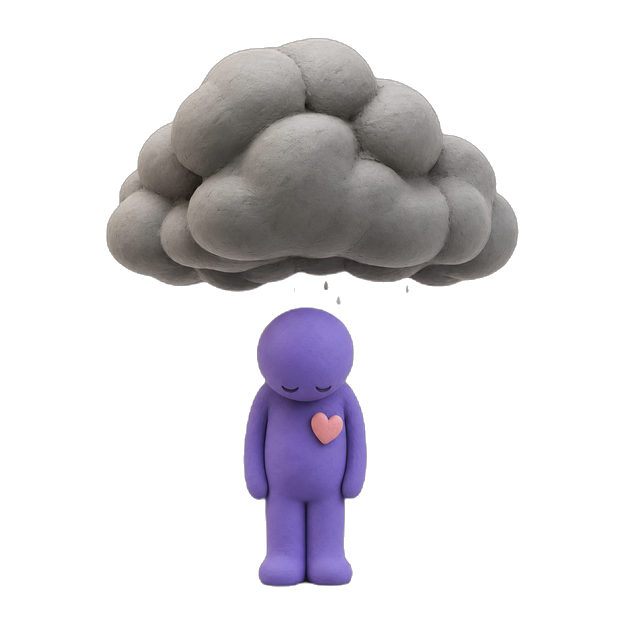
A short picture section. Four images, and you pick the one closest to your fortnight — because people who round their words down to 'fine, just tired' often choose the honest picture.
Energy & sleep
Starting the day already empty, sleep that won't come or breaks at 4am, appetite moving in either direction, and whether mornings are the worst of it.
Head & focus
Reading a page three times, ordinary decisions costing too much, thoughts that circle without resolving, and the tone of the internal commentary.
Body & edge
The other side of it — unable to sit still while exhausted, a jaw that won't unclench, a short fuse, a body braced for something unnamed.

People & worry
The cancelled plans and unanswered messages, whether contact costs more than it returns, and how much of the day goes on scanning ahead.

How it works
Built for the days when forms are too much
Forty identical checkboxes is a lot to ask of someone running on empty. So this isn't one. The guide keeps it short, adapts to your answers, and never asks something your earlier answers already covered.
- 1
Context first
Who this is about and roughly how long the stretch has been going on, so nothing that follows assumes the wrong thing.
- 2
Words, then pictures
Statements you rate, then a short picture section. Two different channels onto the same dimensions, because the two rarely agree exactly — and the gap is informative.
- 3
Signal, then depth
Strong pattern in your answers? The guide follows up right there. Nothing showing? It moves on, and never asks you to describe something you never reported.
Two patterns, often confused
Flat or wound up — constantly confused, meaningfully different
Exhaustion, poor sleep, no enjoyment, no concentration: both patterns produce all four, which is why so many people spend a long time working on the wrong one. The difference is the mechanism underneath, and this conversation is built to tell them apart.
The flattened pattern runs on depletion
- The tank is empty before the day starts, so ordinary tasks come out of reserves.
- Things that used to land don't land — interest may still be there while the pleasure has gone.
- Movement, speech and thought have gone slower and heavier.
- Mornings are the worst of it, and it eases a little by evening.
The wound-up pattern runs on pressure
- Too tired to stand and unable to sit down, at the same time.
- The aversive state is stillness: stopping is when the thinking gets loud.
- The body stays braced — tight jaw, shoulders up, startling easily.
- Sleep is hard to fall into rather than hard to stay in, and dread arrives before the day does.
The two overlap in a lot of people, and often alternate inside the same week — wired until the energy runs out, flat until the pressure builds again. That's why this conversation measures both. If your answers lean toward tension rather than flatness, your results will say so plainly rather than squeezing everything into one story.
At the end
An honest read of a hard stretch
No single number pretending to sum you up, and no diagnosis. Your results walk through each dimension that showed up — what it costs you, and what it says about you — in plain language.
- Two signal meters — the flattened pattern and the wound-up one, each with an honest confidence read
- Which one is doing the work in your answers: one lean, a blend, or both
- Your presentation: depleted, wired, or moving between the two
- Up to 17 dimensions, each with a line you'll recognise and what it costs
- Support resources, shown whether or not you unlock anything
- What shaped the read, so you can judge how much weight to give it
The conversation is open to everyone — full results unlock for $1.99, one time, with a 30-day money-back guarantee.
Start the test
Questions people ask
Before you start
Is this a real depression test?
It's a serious, adaptive traits conversation — but not a clinical assessment, and not a diagnosis. It describes the pattern in your answers for self-knowledge. If it resonates, a licensed professional is the right next step, and your trait map is a concrete thing to bring along.
How long does it take?
About 8 minutes. One question at a time, a short picture section, and real follow-ups. Paths run roughly 30–40 questions depending on what your answers show.
What are the picture questions for?
They measure the same dimensions through a different channel. Plenty of people describe a hard fortnight in words as 'fine, a bit tired' and then pick the image of a weight sitting over everything. Where the words and the picture disagree, that gap is useful.
Does it ask about self-harm?
No. A website cannot respond safely to that in the moment, so we don't ask a question we couldn't answer for. If your answers describe real weight, support lines are shown to you straight away — before any payment, and whether or not you unlock your results.
Why does it ask about worry and tension?
Because a low stretch and a tense one look almost identical from the inside — both leave you exhausted and unable to enjoy things — and they don't ease in response to the same things. Measuring both is how the results can tell you which you're describing.
Can I take it about someone else?
Yes — say so at the start and every question switches to what you can actually observe, with an explicit 'not sure' option for the internal things. The results account for the outside view in their confidence read.
What about my child?
Not yet. Screening a child's mood needs a different set of questions and a different duty of care than an adult self-report, and we would rather not offer a reworded adult version.
What do the results cost?
Taking the conversation is open to everyone. The full results unlock with a single small payment — no subscription required — with a 30-day money-back guarantee. Support resources are never behind the payment. Exact pricing shows on the results page in your local currency.
Is my data private?
Your answers are stored securely, never sold, and used only to build your results. Written answers are processed to interpret your dimensions and nothing else.
The autism traits and ADHD traits conversations describe trait patterns for self-knowledge and entertainment purposes. They are reflective screening-style experiences, not clinical instruments — results are not a diagnosis and cannot tell you, or your child, whether any condition is present. Many of these traits overlap across neurotypes and with everyday personality variation. If your results resonate, a licensed clinician (psychologist, psychiatrist, or developmental paediatrician) is the right next step for a formal assessment.